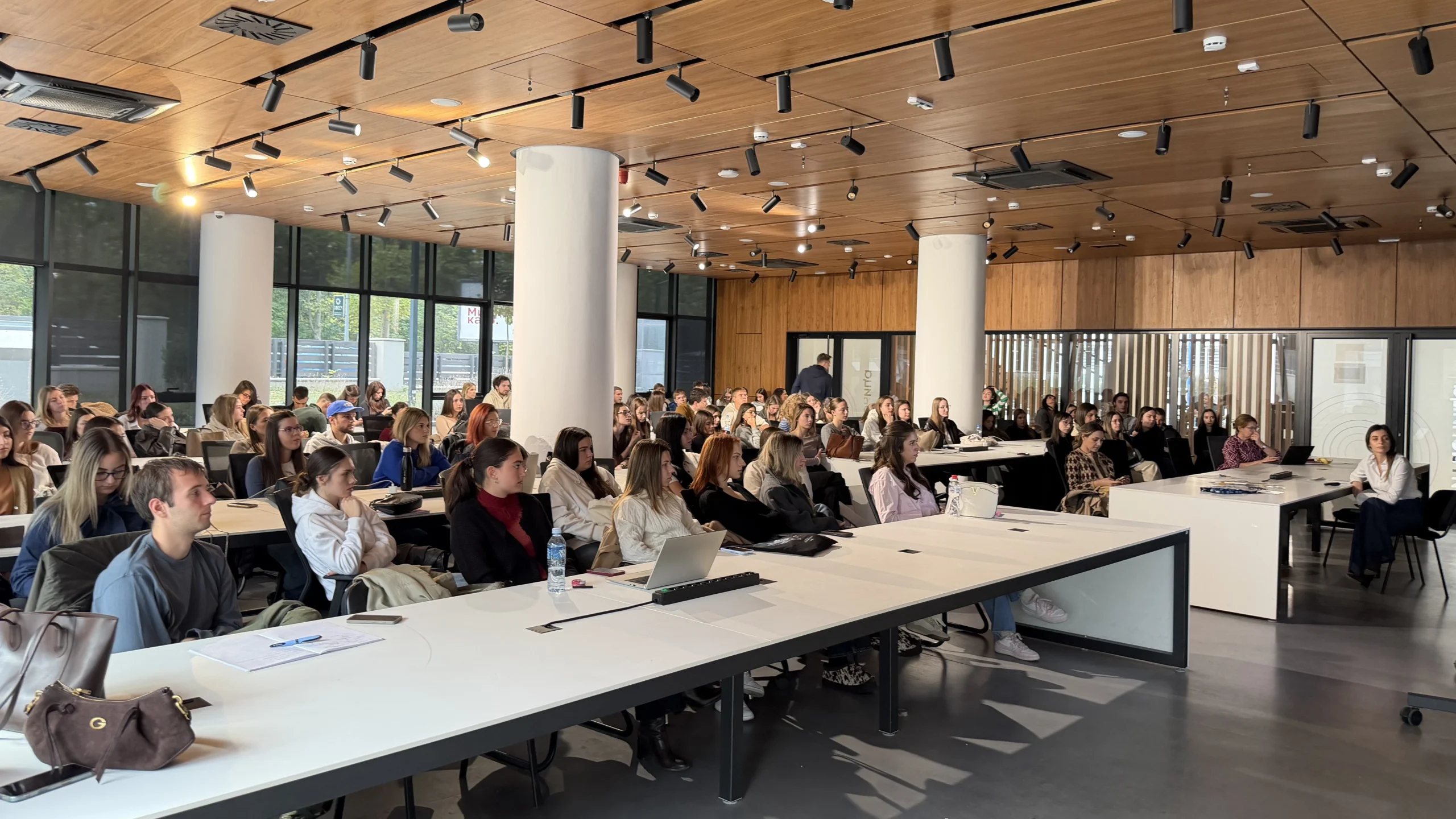
The event was opened by Prof. Dr Sandra Jednak, Vice-Dean for International Cooperation and Finance, who highlighted the importance of international academic cooperation and mobility in improving the quality of education and developing students’ competencies. Bojana Ivanović Bovan, International Realations Officer, presented the opportunities offered to students through the Erasmus+ programme, including semester exchanges, traineeships abroad, and participation in short-term international programmes such as Blended Intensive Programmes (BIPs). In addition to student exchange opportunities under Key Action 1 (KA1) of the Erasmus+ programme, the Faculty’s Erasmus+ Key Action 2 (KA2) projects were also presented. These projects have enabled students to participate in various workshops, camps, and startup competitions.
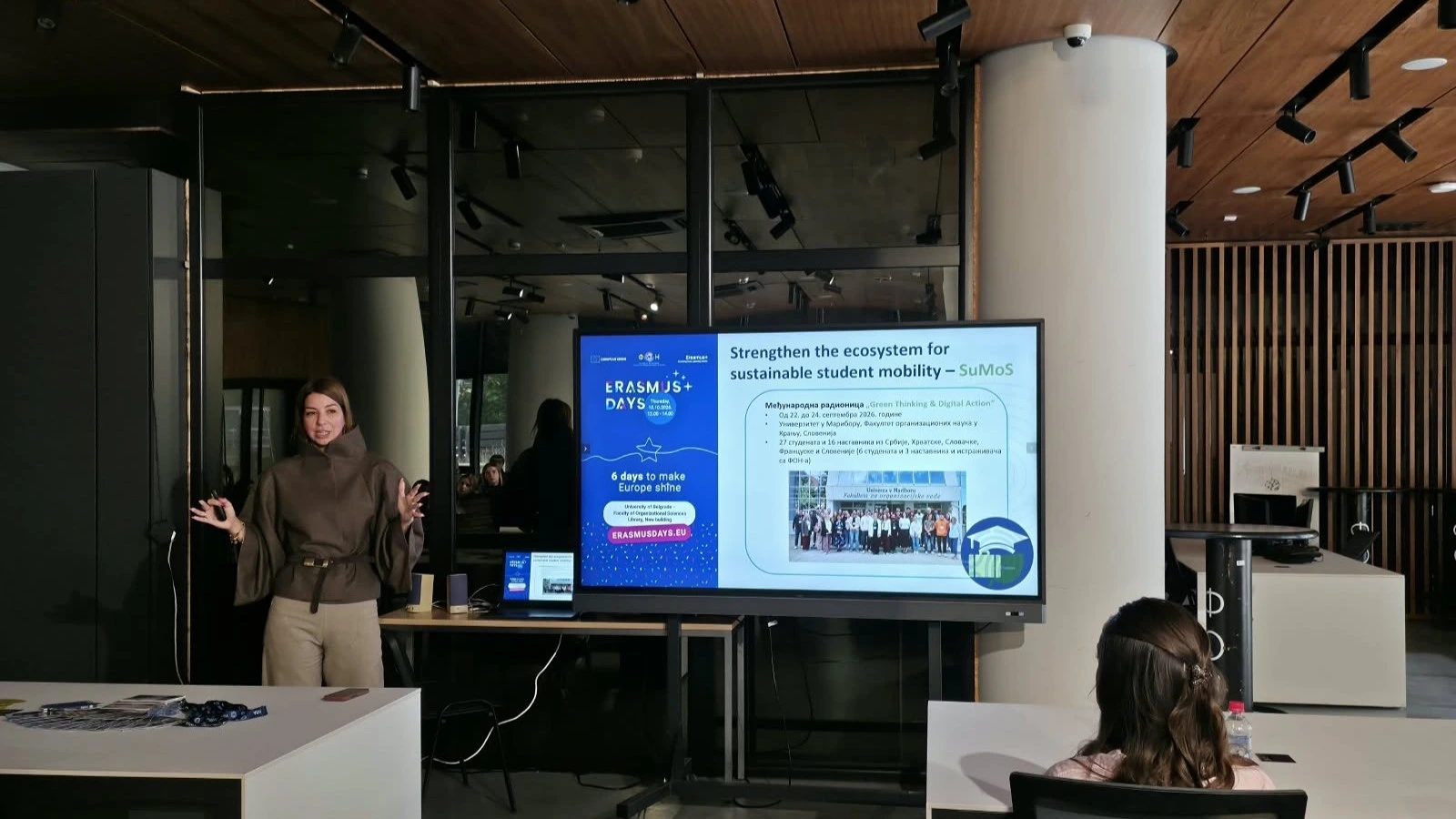
The Faculty currently has four active Erasmus+ projects: Strengthen the Ecosystem for Sustainable Student Mobility – SuMoS; Student-powered and Challenge-based Impact Lab Network for the Development of Transformative Competencies and Inclusive Mindset – REDINEST; (Western Balkans) Web3 Innovation HUB – W3IH; and BACK TO THE FUTURE – Enhancing Futures Literacy through Interactive MOOCs in the Western Balkans. In addition, four new projects have been awarded: EBSI-Enabled Micro-Credentials Ecosystem for Tourism Skills Recognition and Portability – EBSI4Tourism; Cyber-aware Digital Skills for Future Engineers – CYBERSAFE; Building Resilient and Innovative STEM Education through School–Industry Partnerships – STEM TEACH-BRIDGE; and Enhancement of University Research and Education for Knowledge Advance Towards Analytics Interdisciplinary Competencies Acquisition – EUREKA AICA.
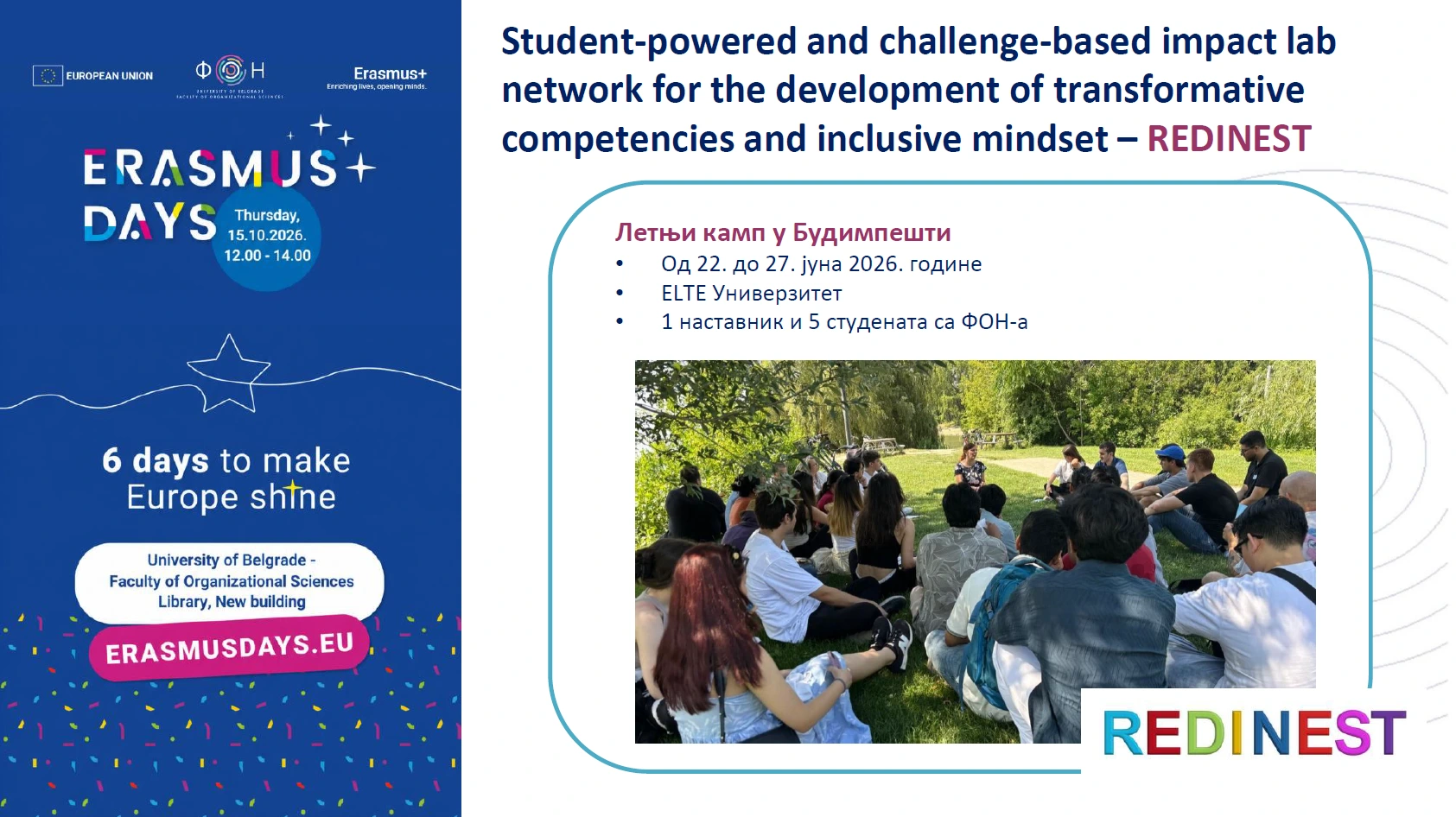
As part of the REDINEST project and its Online Impact Lab programme, FON students participated in five online sessions during the summer semester, working in international teams to address real-world entrepreneurial challenges, with a focus on digitalisation, inclusion, the green transition, and responsible entrepreneurship. The University of Belgrade’s challenge was implemented in cooperation with the company Farmit. Upon completing the programme, students received a certificate and 2 ECTS credits awarded by ELTE University, the project coordinator. The five highest-performing students, led by Professor Mladen Čudanov, also participated in the REDINEST Summer Camp in Budapest from 22 to 27 June 2026.
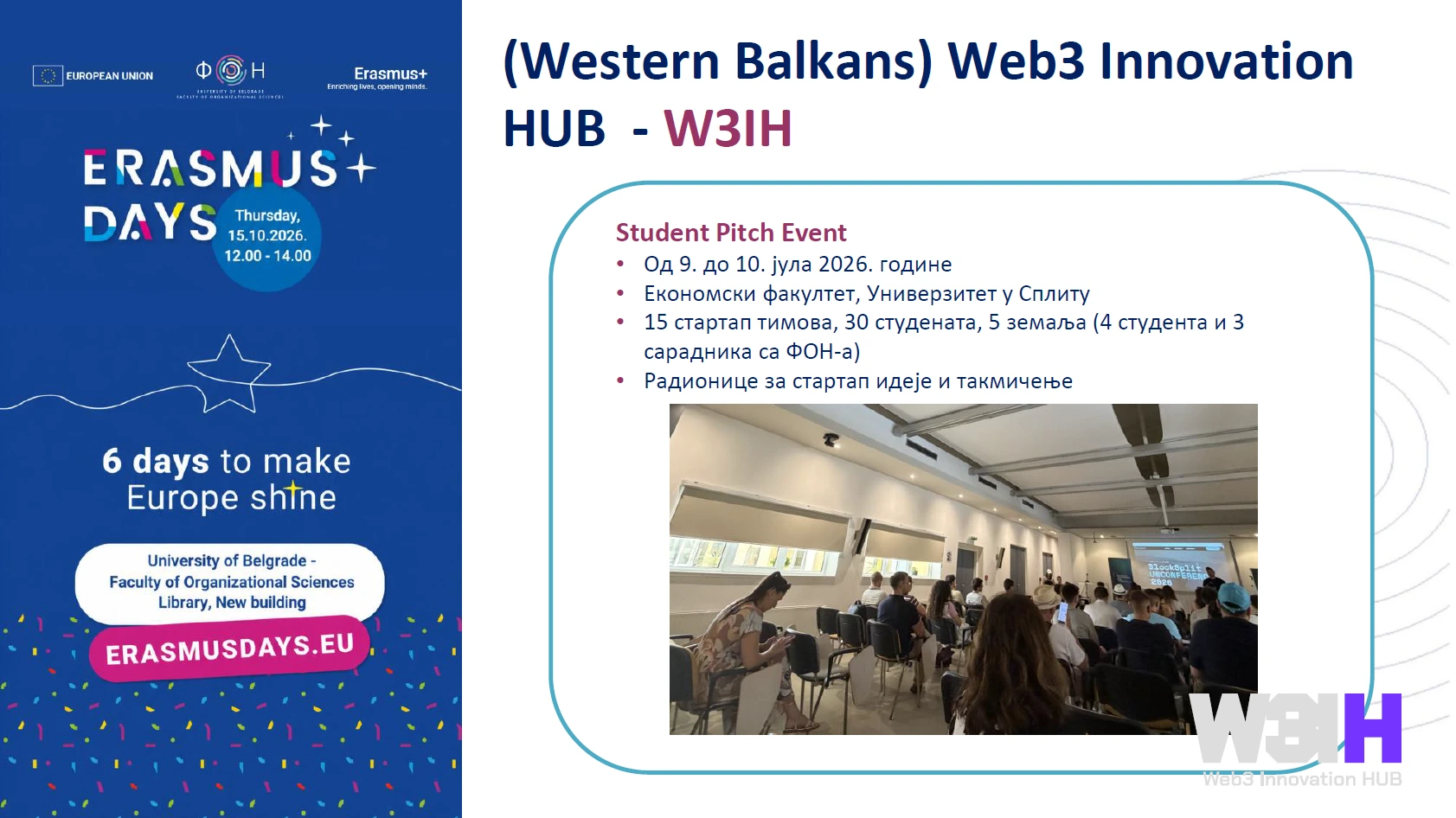
From 9 to 10 July 2026, the international Student Pitch Event was held at the Faculty of Economics, University of Split, as part of the Erasmus+ W3IH project. The event brought together 15 startup teams and 30 students from five countries. The University of Belgrade – Faculty of Organizational Sciences participated with four students and three staff members. The programme included workshops on startup idea development and a business concept pitching competition, providing students with an opportunity to develop their entrepreneurial competencies in an international environment, exchange knowledge, and present their innovative ideas.
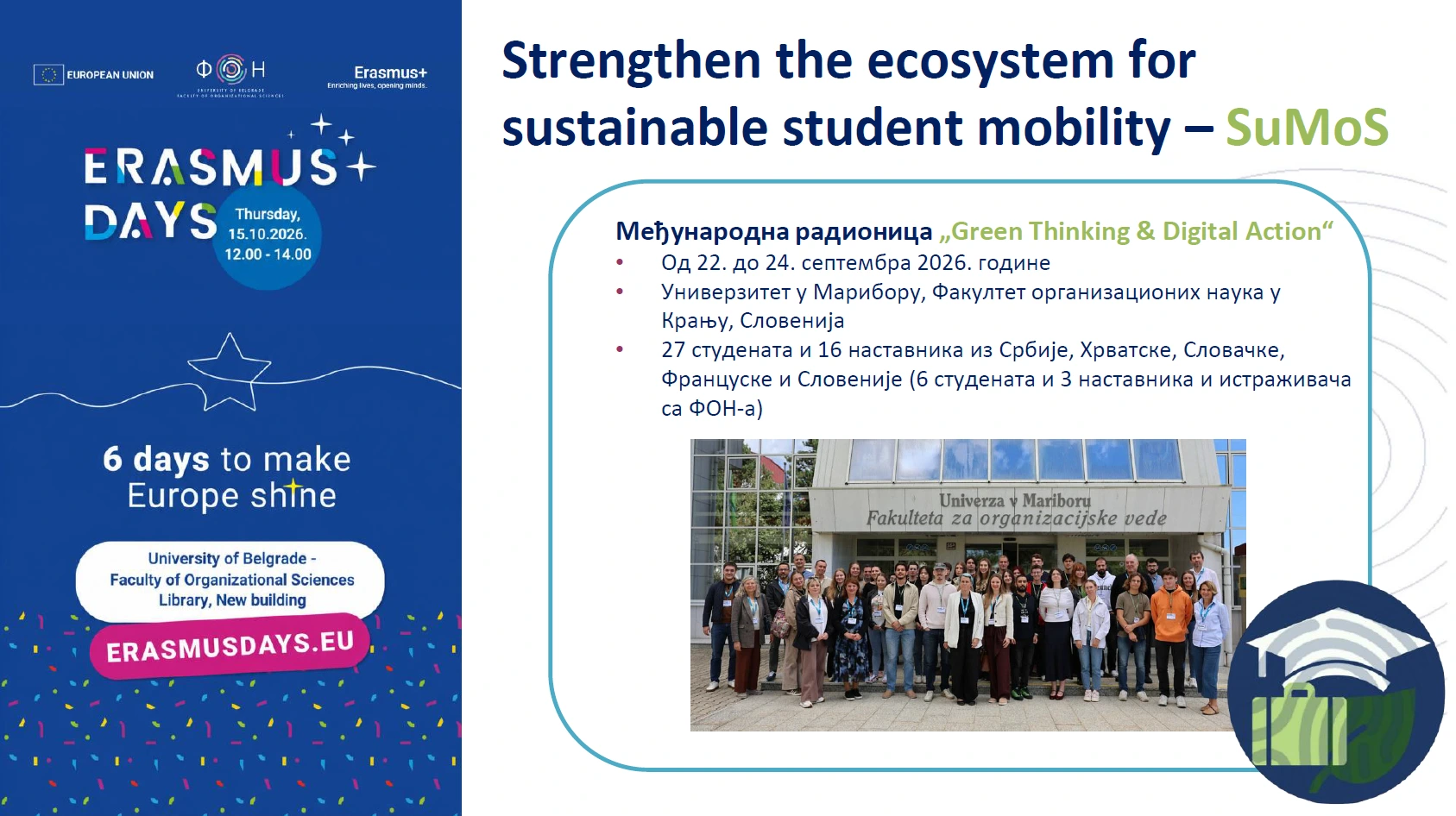
The international workshop Green Thinking & Digital Action took place from 22 to 24 September 2026 at the University of Maribor’s Faculty of Organizational Sciences in Kranj, Slovenia, as part of the Erasmus+ SuMoS project. The workshop brought together 27 students and 16 teachers from Serbia, Croatia, Slovakia, France, and Slovenia, including six students and three teachers and researchers from FON. Through interactive activities and international collaboration, participants developed their knowledge and skills in sustainability, green thinking, and digital transformation. The international workshop Green Thinking & Digital Action took place from 22 to 24 September 2026 at the University of Maribor’s Faculty of Organizational Sciences in Kranj, Slovenia, as part of the Erasmus+ SuMoS project. The workshop brought together 27 students and 16 teachers from Serbia, Croatia, Slovakia, France, and Slovenia, including six students and three teachers and researchers from FON. Through interactive activities and international collaboration, participants developed their knowledge and skills in sustainability, green thinking, and digital transformation.
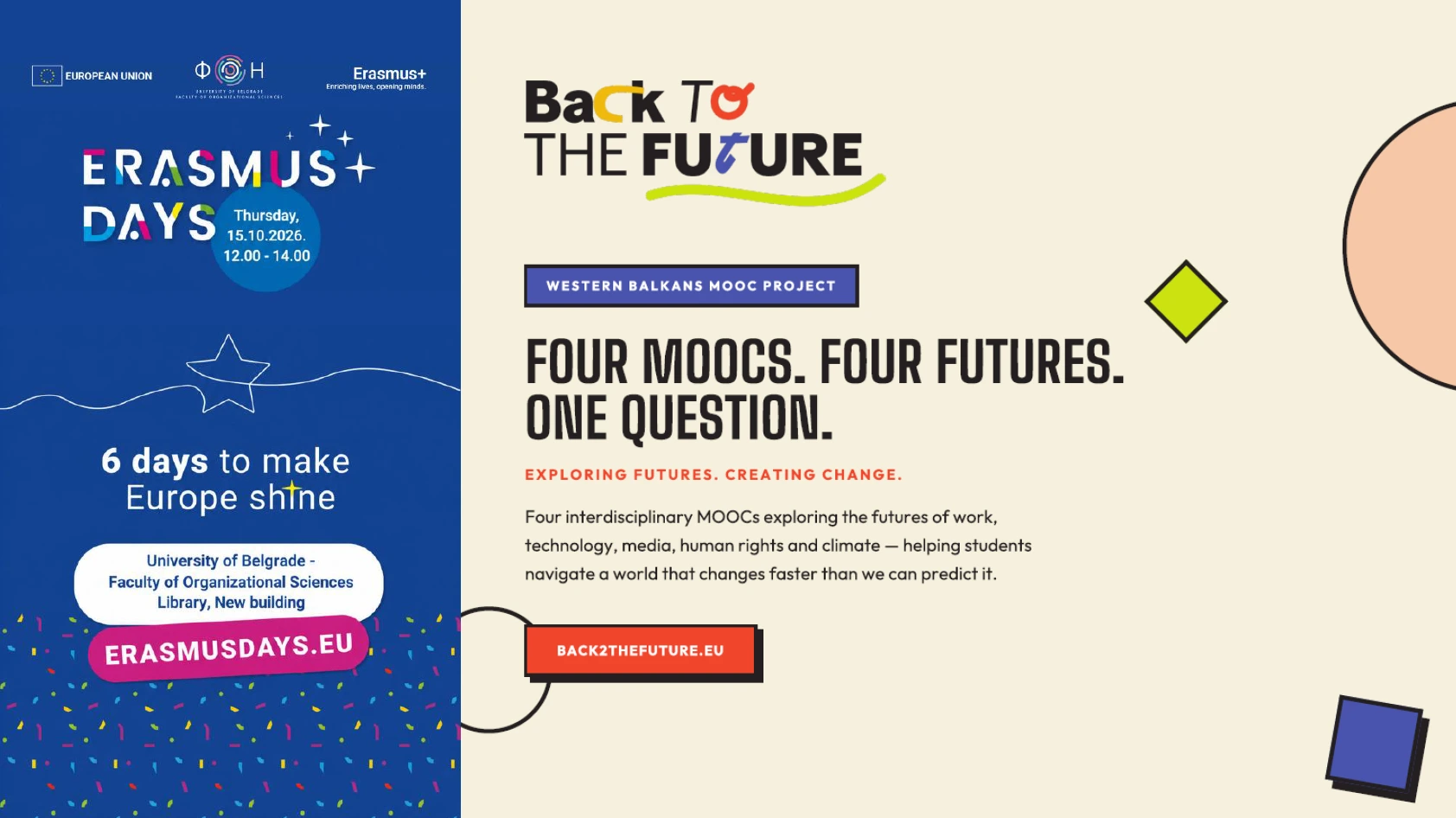
In 2026, the Erasmus+ virtual exchange project BACK TO THE FUTURE was launched. The project brings together five institutions from North Macedonia, Montenegro, Albania, Bosnia and Herzegovina, and Serbia. It will develop four massive open online courses (MOOCs): The Future of Work, Digital Transformation & the Future of Decision-Making, The Future of Media & Communication, and The Future of Human Rights, Equality & Climate. These courses will provide students with opportunities for internationalisation at home and the possibility of earning 5 ECTS credits upon successful completion of each course.
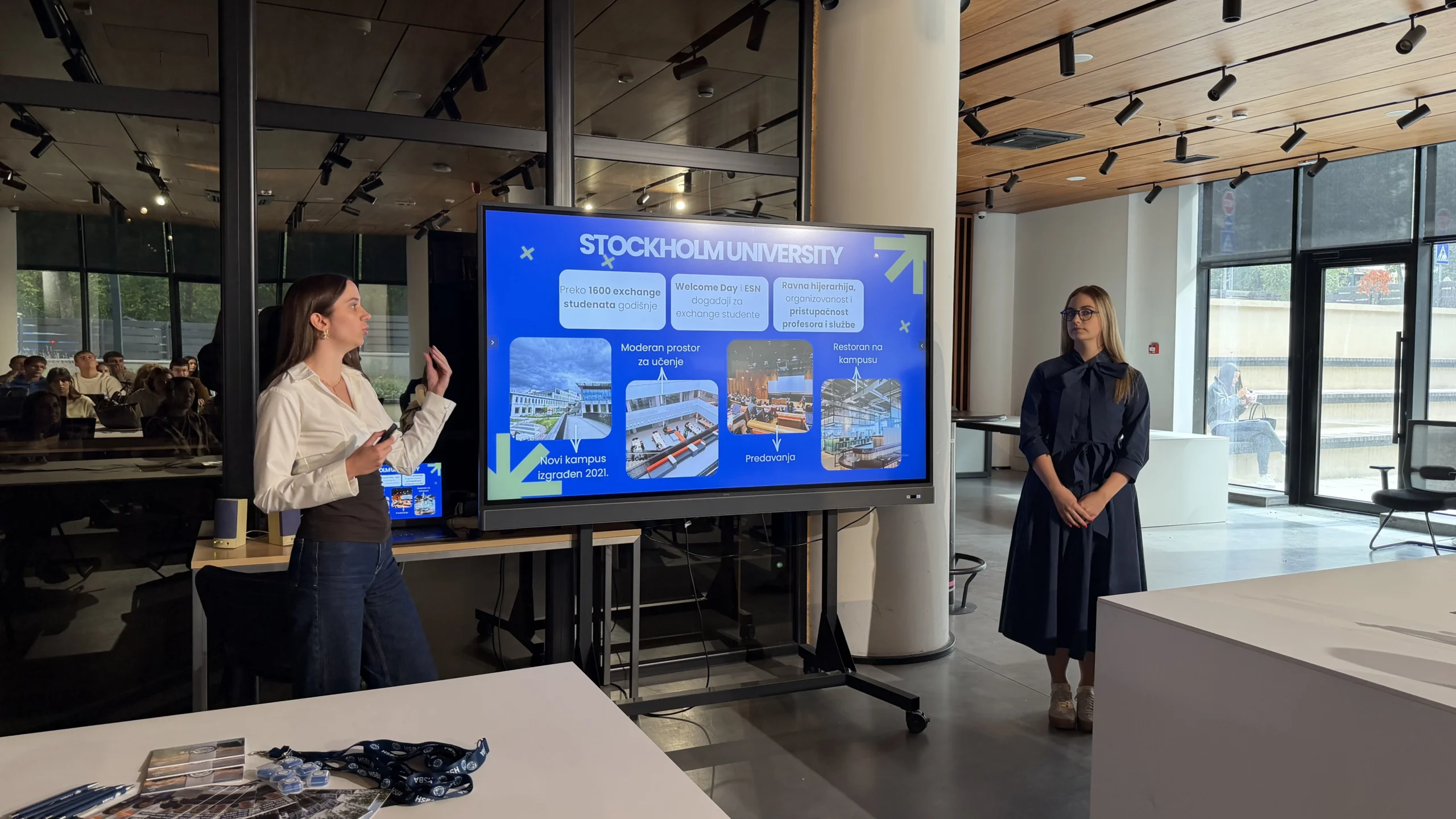
The central part of the event, moderated by Nikolina Papić, International Relations Officer, focused on the experiences of FON students who had participated in international mobility programmes. Students Anđela Kandić and Mina Pešić shared their experiences of studying at Stockholm University in Sweden. They discussed accommodation, the campus, the courses they attended and assessment methods, social life, the local environment, travel, and the costs associated with their exchange.
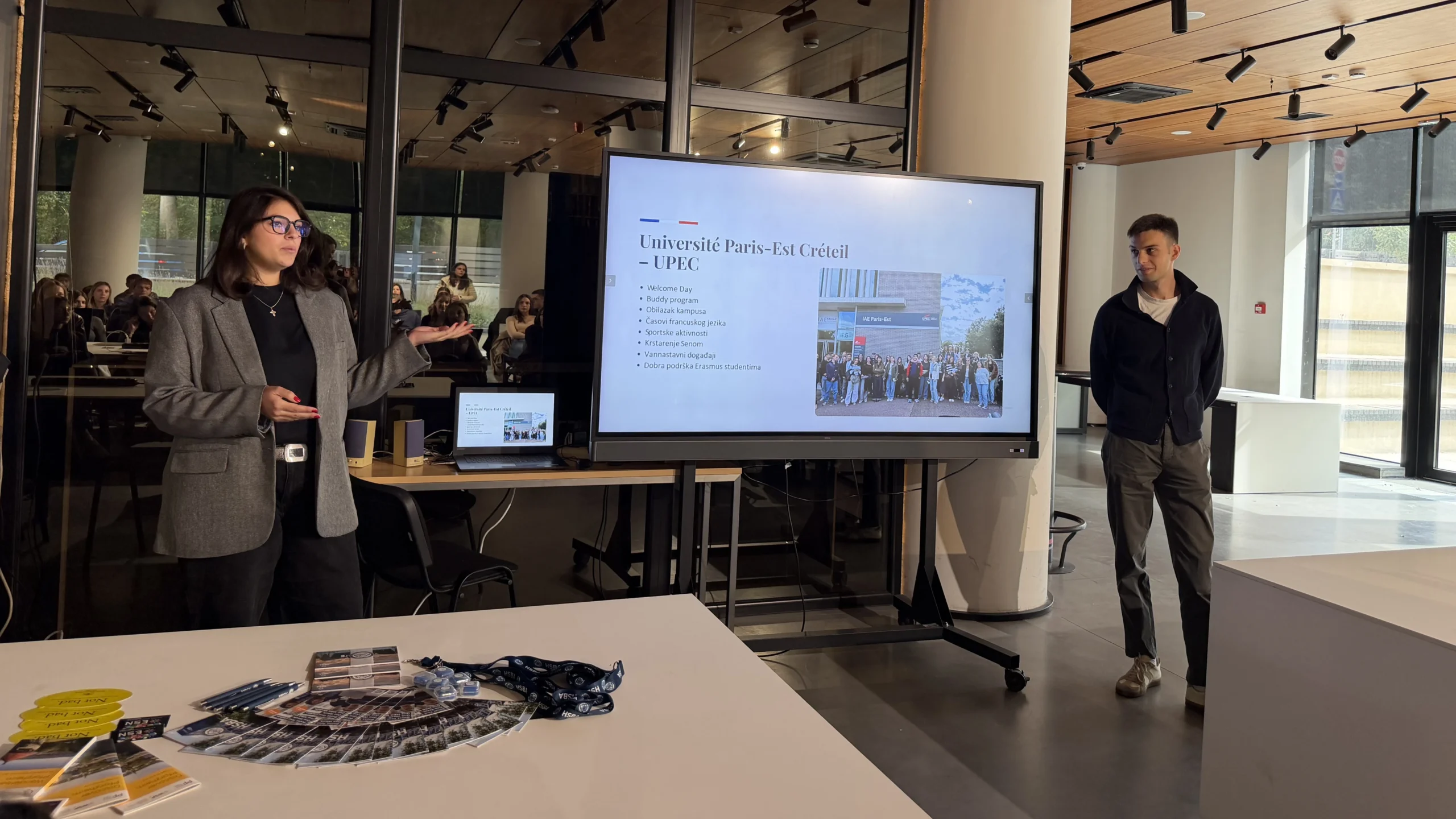
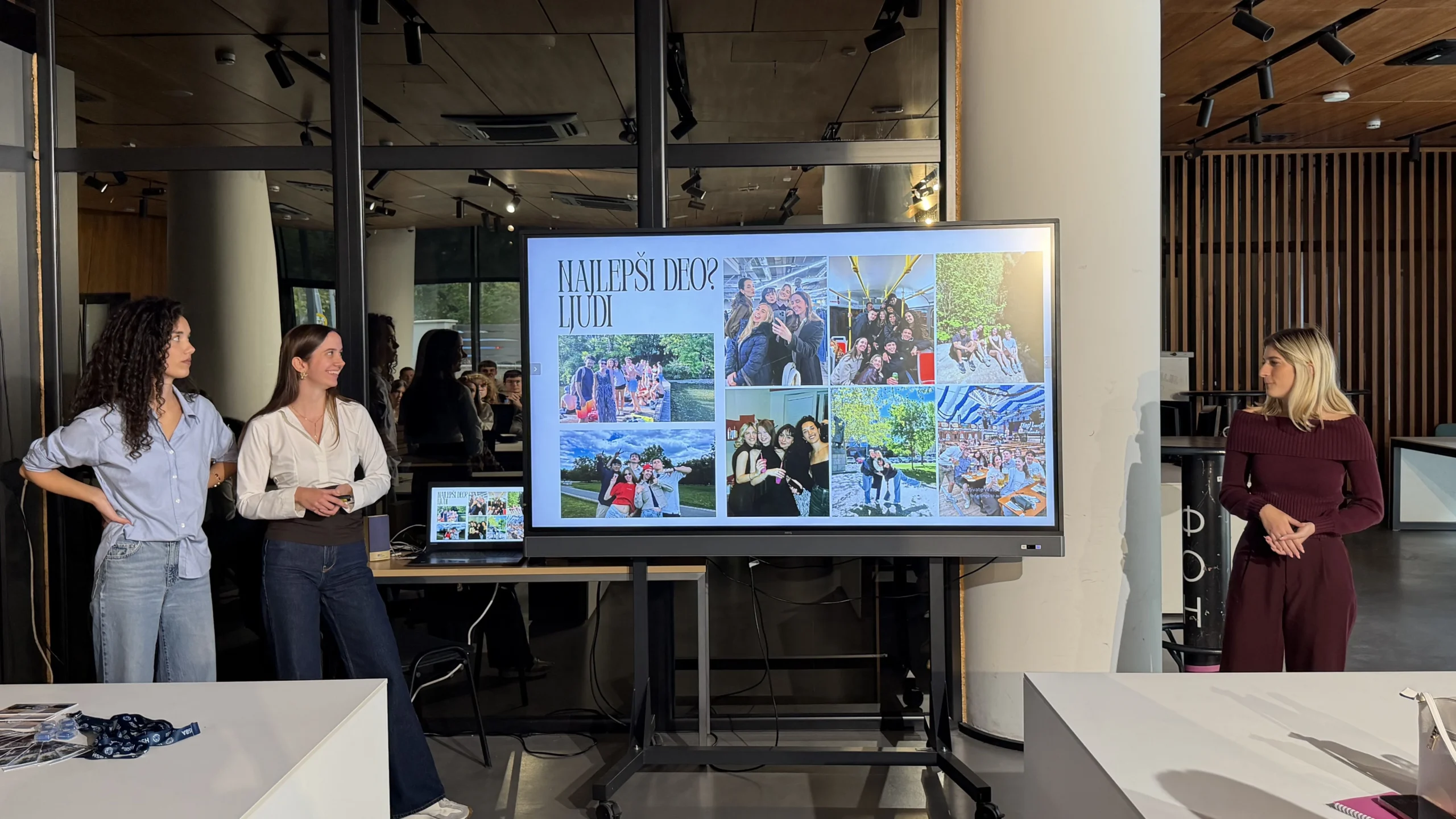
The Université Paris-Est Créteil (UPEC), FON’s partner university with which the Faculty has its longest-standing Erasmus cooperation in France, was represented by students Dejana Đorđević and Petar Ikodinović. They had studied there during different semesters. Alongside life in Paris, they highlighted the people they had met as one of the most valuable aspects of their study abroad experience.
Milutin Miljanić, the first FON student to study at Pforzheim University in Germany, joined the event online. He encouraged his fellow students to apply for mobility programmes, emphasising that such an experience can be life-changing. He also urged them to start preparing for the next application call, expected in January. 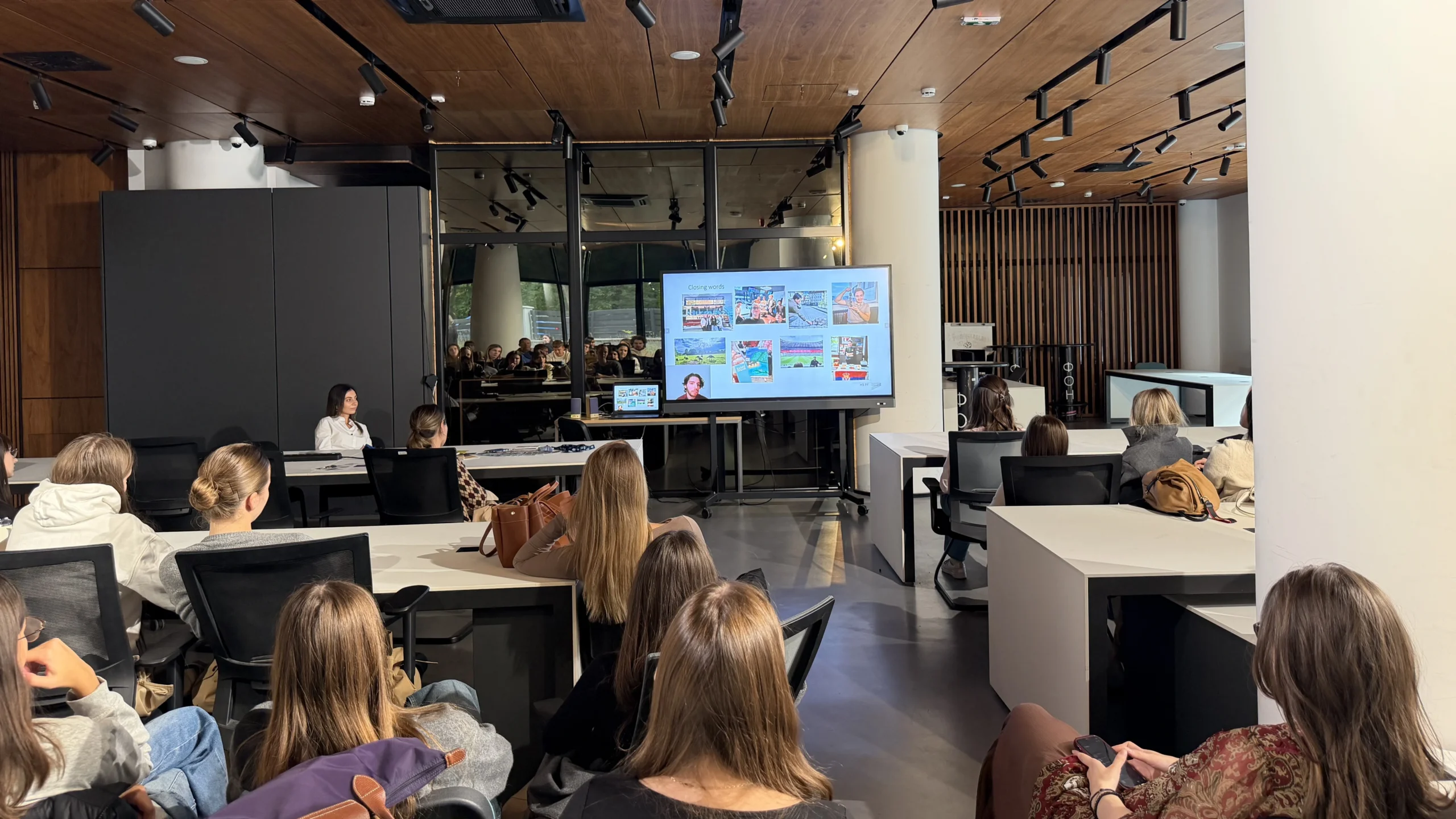
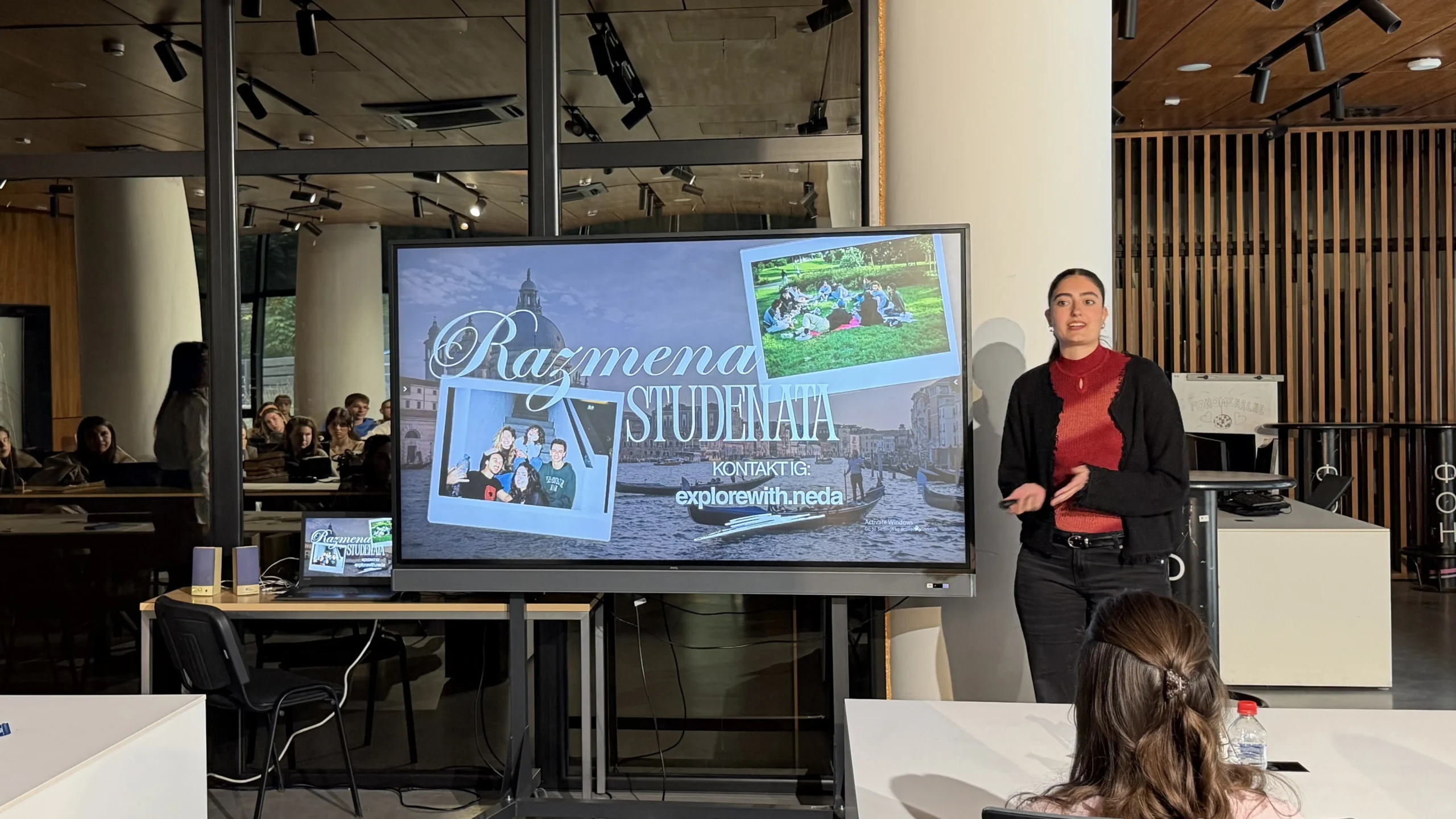
In addition to Erasmus+, the CEEPUS programme is another important opportunity for international mobility. Students Mina Pešić, Anđela Dragićević, Marija Vojvodić, and Neda Bošković shared their experiences of studying at Prague University of Economics and Business through CEEPUS. They discussed the application procedure and the study experience, highlighting the international students they had met as one of the most memorable aspects of their stay. They also noted that they had maintained lasting connections with their international peers.
Every year, FON students have the opportunity to participate in several Blended Intensive Programmes (BIPs), short-term mobility programmes combining five days of physical mobility with two days of virtual mobility. In June 2026, students Magdalena Majstorović and Martina Krivokapić, together with Professor Dejana Nikolić, participated in a BIP organised by ESIC University entitled The Luxury Alchemist: Fashion Marketing: Luxury, Creativity, and Cultural Impact. They shared their experiences of a programme comprising lectures, workshops, and teamwork in international groups. During the programme, they developed a Brand Bible document focused on defining a brand’s identity, values, and heritage, as well as its positioning strategy in the contemporary luxury market. 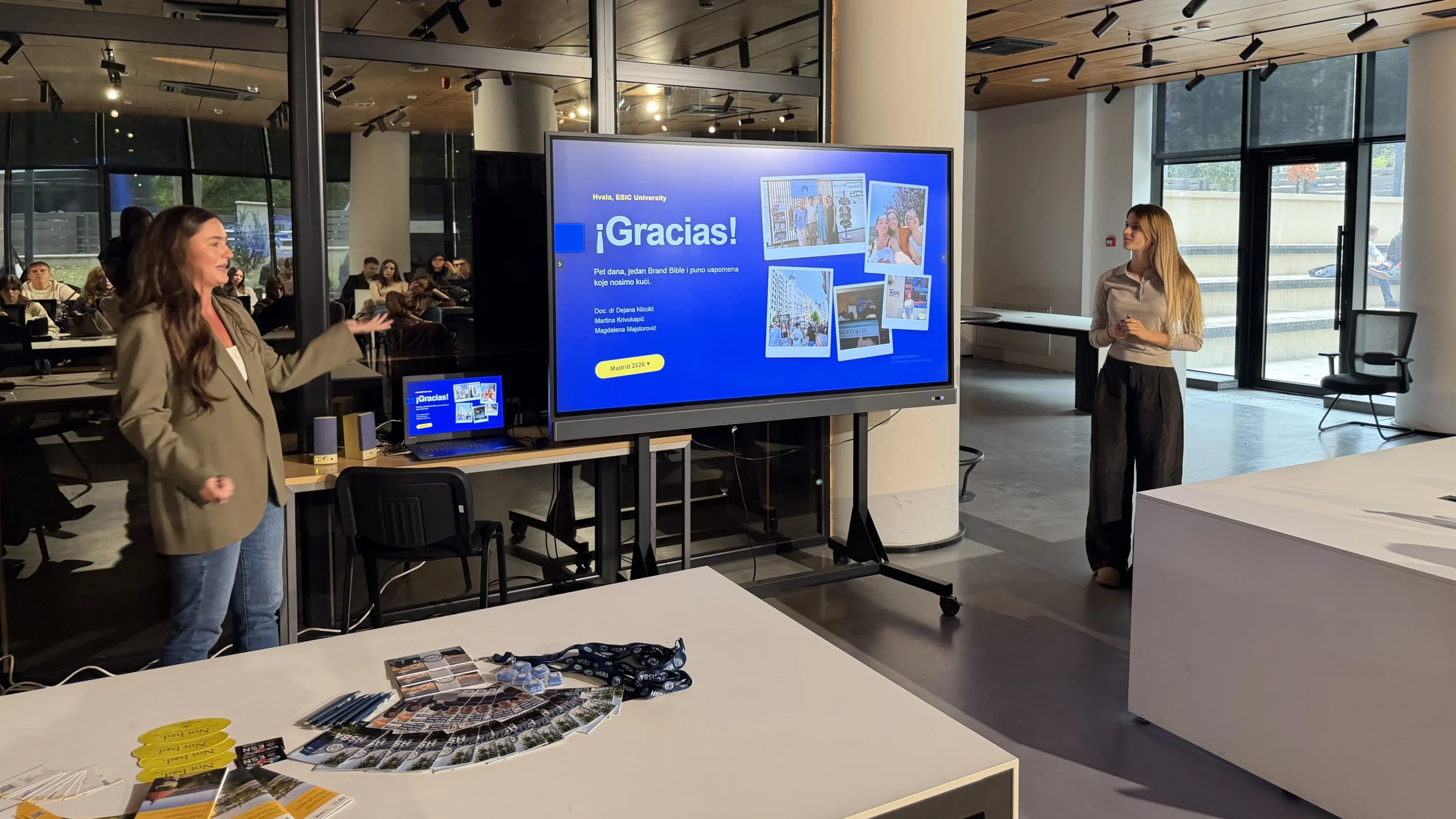
The final part of the event was dedicated to a Q&A session, during which students could obtain additional information about mobility opportunities from the staff of the International Cooperation Office. 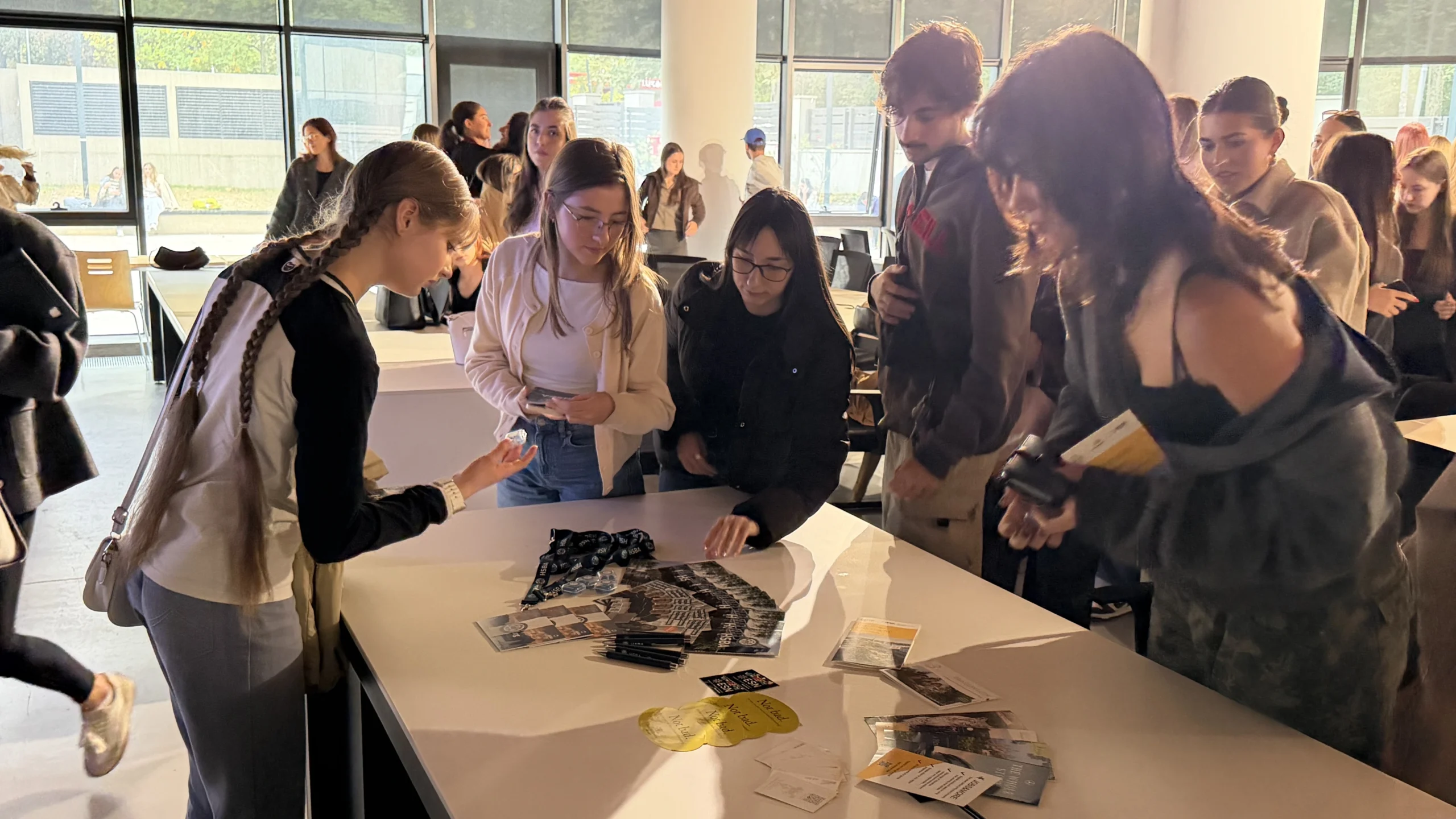
By celebrating #ErasmusDays, the Faculty of Organizational Sciences continues to promote international cooperation, intercultural learning, and the development of its students’ international experience. Events such as this contribute to strengthening the culture of mobility at the Faculty and encourage students to take advantage of the opportunities offered by Erasmus+ and other international exchange programmes.